If you've been noticing kanna popping up in the botanical wellness world lately, you're not alone! This interesting little succulent has actually been around for centuries, long before it started appearing in wellness shops and on product labels.
We're excited to introduce kanna at Naturally Nurtured, and I wanted to share a little more about this plant, where it comes from, its traditional uses, and what you should know before giving it a try.
As always, I believe the more we understand what we're putting into our bodies, the better choices we can make for ourselves. So let's take a closer look!
What exactly is kanna?
Kanna is the common name for Sceletium tortuosum, a low-growing succulent native to the dry regions of South Africa.
You might also come across the name kougoed, which comes from words meaning "something to chew." That gives you a pretty good idea of how the plant was traditionally enjoyed.
Even its botanical name has an interesting story. Sceletium comes from the word sceletus, meaning skeleton. When the leaves dry, their veins become quite prominent, almost resembling a little skeleton.
Not exactly what you'd expect from a wellness plant, right?
A plant with centuries of history
Long before kanna found its way into modern wellness products, it was an important part of traditional life for the San and Khoikhoi peoples of southern Africa.
Traditionally, the plant was crushed, fermented and dried before being chewed, brewed into tea, or used as snuff. It was enjoyed in social and spiritual settings and was also traditionally used during long journeys across the dry South African landscape.
Dutch explorers first documented kanna in 1685, and by the late 1700s, it had become widely traded throughout the region.
I always find it fascinating to learn about plants that have such a long history of traditional use. There's often so much more to their story than what we see on a modern product label.
What's inside kanna?
One of the reasons kanna has attracted interest from modern researchers is its naturally occurring compounds, known as mesembrine alkaloids.
Mesembrine is the best-known of these compounds, although researchers have identified more than two dozen different alkaloids in the plant.
These compounds are being studied for their interactions with certain pathways in the brain, including serotonin-related activity.
Modern research is still developing. Human studies have generally been small and have often focused on specific standardized extracts rather than kanna products as a whole.
In other words, there's still plenty to learn. I think it's important to be curious while also being realistic about what science has and hasn't established.
How do people use kanna today?
While the traditional fermented plant is less common in today's marketplace, kanna is now available in several different forms:
- Extracts and powders: Often standardized to contain a specific percentage of alkaloids.
- Tinctures: Liquid extracts typically taken using a dropper.
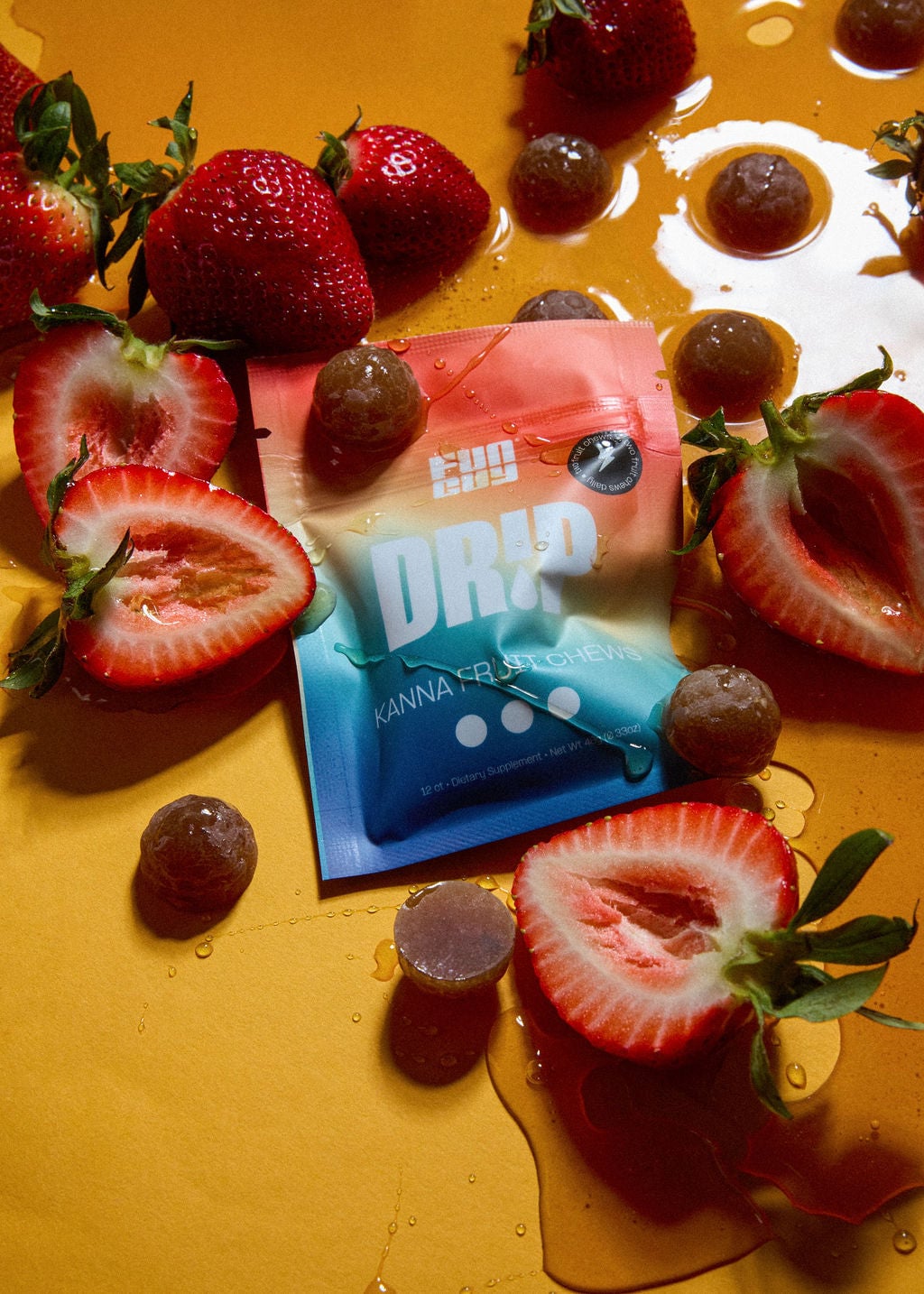
- Edibles: Including fruit chews and chocolates, sometimes blended with functional mushrooms and other botanicals.
You'll often see standardized percentages mentioned on product labels. This simply tells you the concentration of certain compounds in the extract.
For example, our Fun Guy fruit chews use kanna extract standardized to 5% alkaloids. The amount per serving is listed on the product label.
As with any botanical, it's important to look beyond the front of the package and understand exactly what's in the product you're considering.
What does kanna feel like, and why are people drawn to it?
This is probably one of the questions people are most curious about!
Kanna is often described as a mood-enhancing botanical. Depending on the person, the extract and the formulation, people report experiences such as:
- A more positive mood: Some describe feeling lighter, uplifted or more optimistic.
- Relaxation: A sense of calm or reduced tension without necessarily feeling sleepy.
- Social ease: Some people enjoy kanna in social settings because they describe feeling more relaxed and comfortable.
- Mental clarity: Some users report feeling more focused or present.
- Uplifting: Certain people describe a gentle sense of well-being or pleasure.
Of course, everyone's experience is different, and these are reported effects rather than guaranteed outcomes. Early human research has explored kanna's effects on stress responses, anxiety and cognitive function, but studies are still relatively small and more research is needed.
Why are some people choosing kanna instead of alcohol?
Something interesting happening in the wellness space is that more people are exploring alternatives to traditional alcoholic drinks. Some want to socialize without drinking, while others are simply looking for different ways to unwind at the end of a long day.
Kanna has attracted attention from this crowd because of its reported relaxing and mood-lifting effects.
Rather than reaching for a glass of wine or a cocktail, some people are interested in exploring botanicals that offer a different kind of experience.
I think it's important to understand that kanna isn't an alcohol replacement in a medical sense, nor is there sufficient research to establish it as a way to reduce alcohol consumption. It also shouldn't be combined with alcohol or other intoxicating substances.
But the growing curiosity around alcohol-free social experiences is interesting, and kanna is one of the botanicals becoming part of that conversation.
As always, do your research, understand what you're taking, and make informed decisions.
My personal connection with kanna
One of the things I love about running Naturally Nurtured is that my interest in wellness isn't just about the products we carry. It's also about learning, exploring and discovering different approaches to supporting overall well-being.
Kanna is a botanical both my son and I enjoy occasionally as a mood enhancer.
I share this because I believe honest conversations about wellness matter. Everyone's experience is different, and what works for one person isn't necessarily right for another.
Ethical sourcing matters
There's another part of kanna's story that I think deserves attention: where it comes from and the communities connected to its traditional use.
Because kanna is part of the traditional knowledge of the San and Khoikhoi peoples, South Africa has established benefit-sharing agreements intended to recognize and return value to these communities.
Kanna was among the early examples of benefit-sharing arrangements involving the South African San Council.
When choosing a kanna product, I encourage you to look for brands that are transparent about where their kanna is sourced and whether they participate in benefit-sharing initiatives.
To me, responsible sourcing is just as important as knowing what's inside the bottle or package. It's about respecting the history of the plants we enjoy and the people who have carried that knowledge forward.
Is kanna legal?
Kanna is not classified as a federally controlled substance in the United States. However, there are state-specific restrictions.
Louisiana is an exception, with restrictions on certain plants, including kanna, for human consumption. This is why we don't ship kanna products to Louisiana.
Laws and regulations can change, so it's always a good idea to check the rules in your state before purchasing.
A few things to know before trying kanna
Although kanna is a botanical, that doesn't mean it's something to approach casually. It contains naturally active compounds, and a little education goes a long way.
Here are a few things to keep in mind:
- Adults 21 and over only. Follow applicable product labeling and age restrictions.
- Check with your healthcare provider first. This is particularly important if you take prescription or over-the-counter medications, especially antidepressants such as SSRIs or MAOIs, or medications for anxiety or sleep.
- Don't combine kanna with antidepressants without medical guidance. Combining substances that affect serotonin can potentially cause serious reactions, including serotonin syndrome.
- Avoid use during pregnancy or breastfeeding. There isn't enough safety information to establish that kanna is safe during these periods.
- Follow product directions. Don't assume that different extracts or formulations are interchangeable.
- Avoid combining it with alcohol or other substances. Potential interactions and effects may be unpredictable.
And remember, natural doesn't automatically mean risk-free. Being informed is always the best starting point.
Why we chose Fun Guy
When we decide to bring a new product into Naturally Nurtured, we hold it to the same standards we apply to everything else we carry: quality, transparency, responsible sourcing and a brand we feel comfortable standing behind.
Fun Guy is actually a brand we've carried in our store before, and it was a customer favorite! We loved seeing the response and hearing the feedback from people who enjoyed their products. So bringing them back into our lineup felt like a natural fit.
We appreciate that their kanna fruit chews are organic, vegan and gluten-free, made in the USA, and third-party lab tested, with batch results published for customers to review.
We also appreciate their participation in kanna benefit-sharing agreements and their commitment to ethically cultivated kanna from South Africa.
Currently, we carry three Fun Guy varieties:
- Chill
- Flow
- Drip
Each combines kanna with different functional mushrooms and botanicals. You can find the full ingredient lists, Supplement Facts and available lab results on the individual product pages.
And for those who prefer liquid extracts, tinctures are coming soon!
Have questions? Let's talk!
If kanna is new to you, you probably have questions. That's perfectly okay! In fact, I encourage questions.
At Naturally Nurtured, we're not here to tell you what you should take or promise that one product is going to solve everything. We're here to share information, help you understand your options and make the experience a little less overwhelming.
If you'd like to learn more, you're welcome to book a free 20-minute wellness consultation with me. We can talk about your current wellness routine, your interests and any questions you may have.
Because at the end of the day, nurturing yourself starts with understanding yourself.
Body. Mind. Spirit. Let's nurture all three!
*These statements have not been evaluated by the Food and Drug Administration. This content is for educational purposes only and is not intended to diagnose, treat, cure, or prevent any disease. Kanna is not an approved treatment for any medical condition.*
Explore Powders & Capsules
Browse product information, sizes, and pricing: order online for shipping or local pickup in Henderson, NV.